Eco-friendly appliance disposal helps keep useful materials out of landfills and handles risky parts with care. It may include donation, repair, metal recycling, plastic recovery, and safe refrigerant handling. Acworth Georgia Junk Removal helps property owners plan appliance removal in a safe and responsible way.
Old appliances can be heavy, awkward, and hard to move. They may also contain parts that should not enter regular trash. A refrigerator, washer, dryer, stove, or dishwasher needs the right plan before pickup.
Table of Contents
- What Does Eco-Friendly Appliance Disposal Mean?
- How Are Refrigerators Prepared for Eco-Friendly Disposal?
- Can Washers, Dryers, and Dishwashers Be Recycled?
- What Happens to Stoves and Other Large Appliances?
- What Appliance Disposal Rules Should Homeowners Know?
- How Can You Choose a Responsible Appliance Pickup Service?
- Key Takeaways for Eco-Friendly Appliance Disposal
What Does Eco-Friendly Appliance Disposal Mean?
Eco-friendly appliance disposal means handling an old appliance so useful items, recyclable materials, and harmful parts get proper care. The goal is not just to move the appliance away. The goal is to find the safest next step for its condition and materials.
How appliance disposal differs from ordinary junk removal
Ordinary junk removal often involves many kinds of unwanted items. Appliance removal needs more planning because appliances are large, heavy, and made from several materials. Some contain refrigerants, oils, batteries, wiring, or electronic controls.
A responsible crew first checks the appliance and its condition. A working refrigerator may be fit for reuse or donation. A damaged washer may provide useful parts. A broken appliance may go to a recycling site that separates metal, plastic, glass, and wiring.
This process differs from leaving an appliance beside a road or placing it in a household bin. Those choices may create safety problems and may break local collection rules. They can also send useful materials to a landfill.
Why responsible handling matters for materials and the environment
Many appliances contain steel, copper, aluminum, glass, and strong plastics. Recycling gives these materials another use. It also lowers the need for new raw materials. Reuse may be an even better option when an appliance is clean, safe, and still works well.
Acworth Georgia Junk Removal can help property owners sort these choices before removal. The right plan depends on the appliance, its condition, its size, and local rules. A clear plan also helps protect floors, walls, doors, and nearby property during the move.
How Are Refrigerators Prepared for Eco-Friendly Disposal?
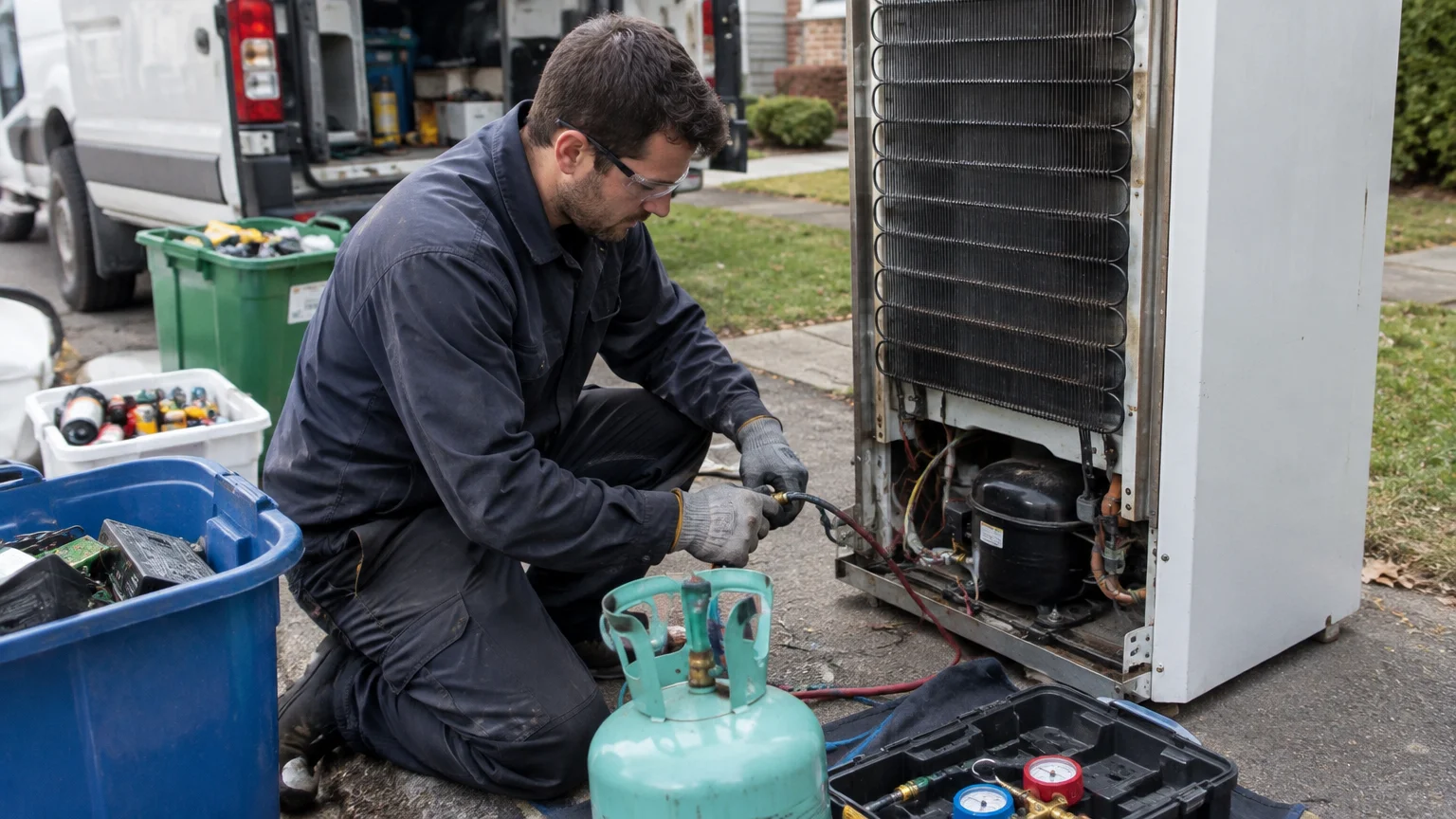
Refrigerators need special care because their cooling systems contain refrigerant. Refrigerant is a chemical that moves heat from inside the refrigerator to the outside. Local guidance should be checked before the appliance is taken apart or recycled.
Refrigerant recovery and safe removal
A homeowner should not cut cooling lines, puncture a compressor, or release refrigerant. These actions can harm people, damage equipment, and let the chemical escape. Keep a refrigerator upright when possible, and secure its doors during movement.
Before pickup, the owner can remove all food, shelves, bins, and loose items. Wiping the inside helps reduce odors and mold. The appliance should then be unplugged as the pickup provider directs. If it has a water line or ice maker, handle the line with care.
A qualified recycling partner can recover the refrigerant. The partner can also manage the compressor, oils, and other cooling parts. The outer cabinet can then enter a separate recycling process. This is why refrigerator removal is not the same as regular household waste collection.
Recycling metal, plastic, glass, and electronic components
After safe preparation, a refrigerator may be taken apart for material recovery. Steel cabinets, copper tubing, aluminum parts, glass shelves, plastic bins, and wiring can often be sorted. Electronic control boards may need a special recycling stream.
Not every part can be reused. Dirt, damage, mixed materials, and contamination may limit recovery. Careful sorting still gives the appliance a better path than a landfill in many cases.
A refrigerator that still works may be donated or reused. The receiving group may check its age, condition, energy use, and safety. Acworth Georgia Junk Removal can explain the removal path that best fits homeowners and landlords.
Can Washers, Dryers, and Dishwashers Be Recycled?
Yes, washers, dryers, and dishwashers can often be recycled, repaired, donated, or used for parts. Their next step depends on their condition, age, cleanliness, design, and local facility rules. Most contain a large amount of useful metal.
Which parts are commonly recovered and reused
Washers and dryers often contain steel frames, drums, motors, wiring, aluminum, and copper. Dishwashers may contain stainless steel, plastic panels, pumps, heating parts, and electronic controls. Some parts can help with repairs. Others can be processed as scrap material.
A working appliance may have a better next use than a broken one. A donation group, repair shop, or reuse center may accept it after checking its safety and condition. Owners should share details about leaks, noise, rust, missing parts, and other faults.
Dryers need extra care because lint and heat damage may create safety risks. A dryer that stopped working should not be connected or tested by someone without the right skills. The same rule applies to washers with water leaks or damaged power cords.
How appliances are separated at recycling facilities
At a recycling facility, workers or machines may separate large metal pieces from plastic, wiring, glass, and small parts. Some appliances are compacted or shredded only after liquids, hazardous parts, and electronic items are removed.
Before pickup, owners can empty pockets, remove loose racks, and clean visible food or dirt. They should not take apart motors, sealed systems, or wiring without proper training. Taking apart a heavy appliance can cause cuts, strains, electric shock, or crushed fingers.
A service that handles washer and dryer pickup should explain where appliances go after collection. Acworth Georgia Junk Removal can help customers review options for homes, rentals, offices, and renovation projects in the main Acworth area. This includes Downtown Acworth, Lake Acworth, Kennesaw, Woodstock, Marietta, Cartersville, and nearby communities.
What Happens to Stoves and Other Large Appliances?
Stoves, ranges, ovens, and similar appliances may be donated, repaired, recycled, or handled through an approved facility. The safest choice depends on whether the unit uses gas or electricity, whether it works, and how it is connected.
Preparing gas and electric appliances for pickup
Gas appliances should be disconnected by a qualified person when required. The gas supply must be shut off, and the connection should be checked for safety. A homeowner should never cut a gas line or move a connected range through a doorway.
Electric stoves can also be hard to move. Some use a high-voltage connection, so the power must be disconnected safely before handling. A damaged cord, hot surface, or broken control can create a risk during removal.
Owners can clear cookware, racks, trays, and loose items before pickup. They can also measure narrow doors and hallways. This check helps the crew plan a safe route and protect walls and floors.
Donation, refurbishment, recycling, and disposal options
A clean, working stove may be accepted by a reuse group or donated to a household in need. A repair shop may fix certain models. Appliances that cannot be reused can often be separated for metal recovery.
Dishwashers, ranges, and other large units may contain mixed materials. Their recycling path may include steel, copper, aluminum, wiring, glass, and plastic. Parts with grease, damage, or contamination may need special handling.
The same idea applies to other bulky items, including hot tubs. A hot tub may need draining, disconnection, cutting, and material sorting. It should not be treated like a small appliance. For any large item, a removal service can review access, weight, connections, and safe handling before pickup.
What Appliance Disposal Rules Should Homeowners Know?
Appliance disposal rules vary by state, county, city, facility, and appliance type. Refrigerants, electronics, oils, batteries, and gas connections may have separate rules. Homeowners should check local guidance or ask the pickup provider which rules apply.
Local requirements for refrigerants, electronics, and hazardous components
A refrigerator or freezer may need refrigerant recovery before recycling. Electronic controls and circuit boards may need an electronics recycling stream. Batteries, oils, cleaning chemicals, and damaged parts should not be mixed with ordinary household waste.
Rules may also cover curbside placement, bulk collection, transfer stations, and landfill acceptance. Some communities require appointments or limit which appliances they collect. A private facility may have its own preparation rules too.
Homeowners should keep manuals, model details, and proof of ownership when useful. They should also tell the service about leaks, broken glass, sharp edges, pests, or unusual access. Clear details help prevent delays and unsafe surprises.
Why disposal rules can vary by appliance and location
A refrigerator has different risks from a dishwasher. A gas range has different connection needs from an electric dryer. Local agencies may also use different systems for bulk items and recyclable materials.
Advice from another city may not apply in Acworth. Acworth Georgia Junk Removal can help property owners understand practical steps for appliance removal in the local service area. The provider should still follow current facility rules and send regulated items to the proper handler.
A homeowner does not need a professional for every task. Emptying an appliance, cleaning it, measuring doorways, and removing loose shelves are usually simple tasks. Professional help is safer for gas lines, sealed cooling systems, high-voltage wiring, heavy lifting, stairs, and tight spaces.
How Can You Choose a Responsible Appliance Pickup Service?
A responsible appliance pickup service explains how it handles reuse, recycling, donation, and disposal. It should also ask about the appliance, access, connections, and possible hazards. Clear answers help owners choose a safer and more useful removal plan.
Questions to ask about recycling, donation, and disposal practices
Before scheduling, a homeowner can ask:
- Does the service sort appliances for reuse and material recovery?
- How are refrigerators and freezers handled before recycling?
- Are working appliances considered for donation or repair?
- Which appliances does the receiving facility accept?
- How should gas, water, electric, and cooling connections be handled?
- What should the homeowner remove before the crew arrives?
The service should avoid vague promises. It should explain that the final outcome depends on the appliance condition and receiving facility. A working appliance may be reused, while a damaged unit may be taken apart for materials.
What to expect when scheduling appliance removal in Acworth
During scheduling, the owner should share the appliance type, size, location, condition, and access route. Photos may help the provider understand stairs, narrow doors, elevators, gates, and other limits. The owner should mention if the appliance is connected or leaking.
On pickup day, the area should be clear of loose objects, children, and pets. The crew may protect floors and guide the appliance through the property. The owner should not help lift unless the crew says it is safe.
Acworth Georgia Junk Removal serves homes, rental properties, offices, and renovation sites across Acworth. Responsible service means more than quick loading. It means choosing a sensible next step for the appliance and its materials.
Key Takeaways for Eco-Friendly Appliance Disposal
- Refrigerators need safe refrigerant handling before recycling.
- Washers, dryers, dishwashers, and stoves often contain useful materials.
- Gas, electrical, cooling, and hazardous parts need careful handling.
- Local rules can differ by appliance and location.
- A responsible pickup service explains where each appliance goes.
A practical preparation checklist for refrigerators and other appliances
- Empty the appliance and remove loose shelves, racks, and bins.
- Unplug electrical units only when it is safe to do so.
- Do not cut gas lines, cooling lines, cords, or sealed systems.
- Tell the provider about leaks, damage, stairs, and tight access.
- Keep doors and walkways clear before the removal team arrives.
- Ask how reusable materials and regulated parts will be handled.
These steps help protect people, property, and the environment. They also make pickup easier for large appliances that are hard to move through a home or business.
When professional removal is the safer and more convenient option
A homeowner usually does not need professional help to clean an appliance or remove loose items. Professional removal is a better choice when the unit is heavy, connected, leaking, damaged, upstairs, or hard to move. Trained crews can also help reduce strain and property damage.
In conclusion, the best disposal path depends on the appliance and its condition. A careful service can connect reuse, donation, recycling, and proper disposal steps. Contact us to arrange responsible appliance removal.
Frequently Asked Questions
How can someone get rid of an old refrigerator?
An old refrigerator can go to a reuse group, appliance recycler, or removal service. The cooling system should not be cut or damaged. The refrigerator should be emptied and kept secure until pickup. A qualified handler can recover refrigerant and send the remaining metal, plastic, glass, and wiring through proper channels.
Can a washer and dryer go in regular trash?
Large washers and dryers usually need bulk collection, a recycling facility, or an appliance removal service. Regular household bins are not made for their weight or mixed materials. Before pickup, owners should empty the machines, remove loose items, and report leaks, damage, stairs, or tight access.
Is eco-friendly appliance disposal available for broken appliances?
Yes, broken appliances may still have useful metal, wiring, plastic, glass, or parts. A facility will decide what can be recovered after checking the appliance. Eco-friendly appliance disposal does not mean every piece will be reused. It means the appliance receives a safer and more suitable handling path.
Should a homeowner disconnect a gas stove before removal?
A homeowner should follow local safety rules and use a qualified person when gas disconnection is required. Gas lines should never be cut or forced apart. The removal provider should know that the stove is gas-powered before pickup. This allows the job to be planned around safe disconnection and movement.
What happens to appliances after pickup?
The next step depends on condition, age, safety, and facility rules. Working units may be donated or repaired. Others may be dismantled for steel, copper, aluminum, plastic, glass, wiring, and parts. Refrigerators may need refrigerant recovery before recycling. Some damaged materials must go to special handling facilities.
If you are unsure what you have, the appliance can be reviewed before removal. This helps identify connection risks, access problems, and the best handling path.
If you are not sure what you are dealing with, it is worth having someone look at it before it turns into a bigger job. Get in touch with Acworth Georgia Junk Removal today and we will tell you where you stand.