Drywall removal FAQs explain what debris can be hauled away, how to limit dust, and what affects the schedule. Drywall and plaster cleanup may include broken boards, loose scraps, and other renovation waste. The right plan depends on the materials, site access, local disposal rules, and nearby work.
A remodel can leave piles of debris that slow down the next step. Broken boards, dusty scraps, and plaster can make a room harder to use. A clear removal plan helps homeowners, contractors, and property managers keep work areas safer and ready for what comes next.
Table of Contents
- What does drywall removal include?
- How much does drywall removal cost?
- How should drywall be disposed of?
- How can dust be controlled during drywall removal?
- How long does drywall removal and hauling take?
- Can drywall removal be handled as a DIY project?
- How should you prepare a site for drywall removal?
- Frequently Asked Questions
- Key takeaways
- Conclusion
What does drywall removal include?
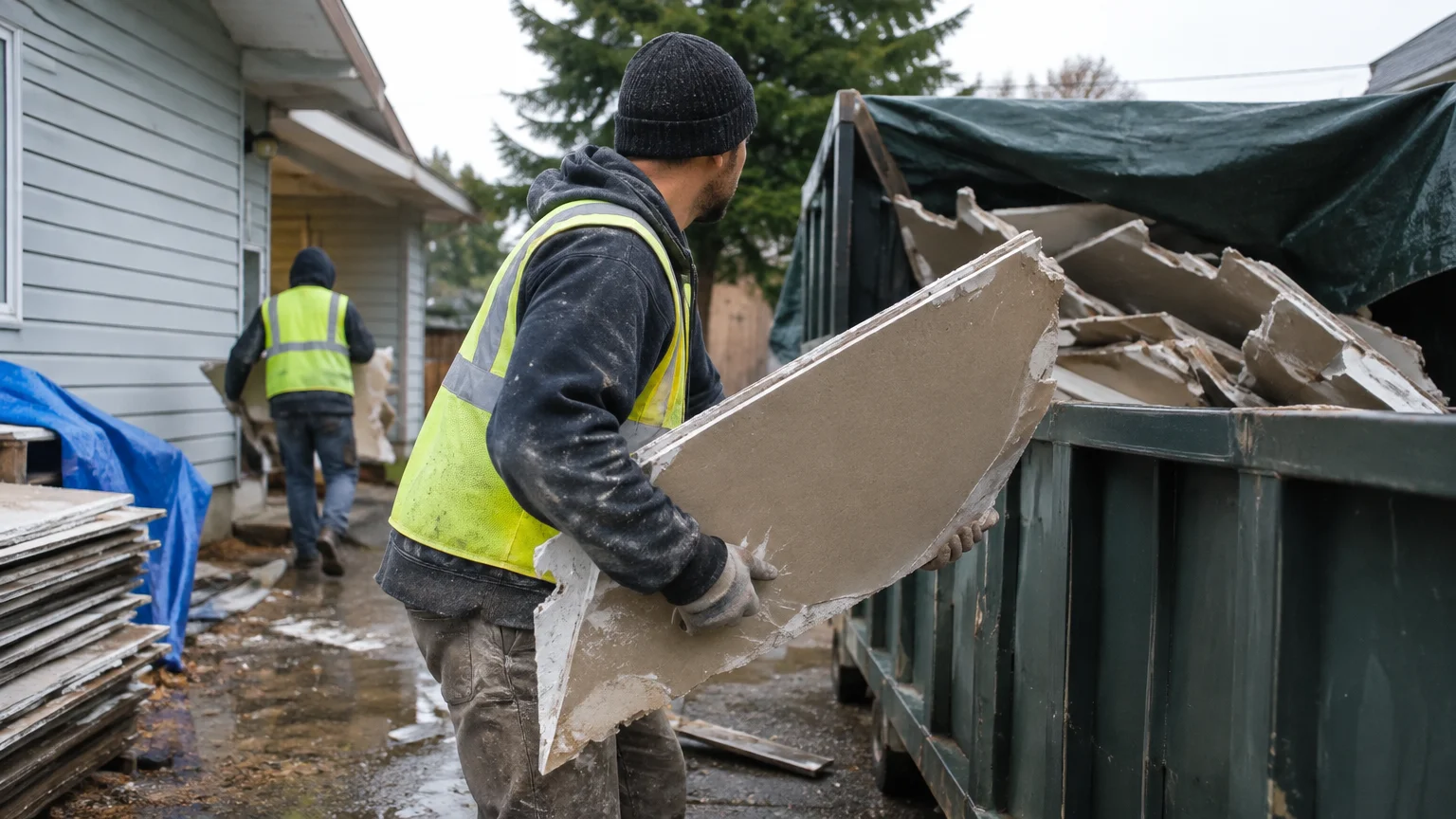
Drywall removal usually means taking away unwanted wallboard, plaster, and related tear-out debris. The job may also include gathering loose scraps and loading them for disposal. Before work starts, the property owner and removal team should agree on what stays and what goes.
Which materials and debris are typically removed?
Cleanup may include drywall sheets, broken board pieces, plaster, and small amounts of wood or trim from the same project. Some jobs also have insulation, metal corner bead, screws, or packaging. These materials may need different handling, so separate them when you can.
Drywall is a wall or ceiling panel with a gypsum center and paper sides. Plaster is another wall material, often found in older buildings. The two may look alike when broken, but their weight and disposal options can differ. Tell the crew what is there rather than assuming it is all drywall.
Construction debris removal may also include other renovation waste, such as wood scraps or concrete pieces. Appliances, furniture, and household trash are separate items to discuss before pickup. A full-service junk removal company may take mixed loads, but accepted items vary by provider and local rules.
What should be clarified before work begins?
Confirm which rooms, piles, and items are part of the removal. Point out anything that must stay, such as doors, fixtures, or tools. Explain whether debris is indoors, outside, upstairs, or behind a locked gate. These details help the team plan access and avoid mix-ups.
Acworth Georgia Junk Removal can help homeowners and contractors discuss drywall and renovation debris before cleanup. Say whether the material is bagged, loose, or still attached to a wall. If the remodel also has furniture or appliances, mention those items separately so the plan covers the whole job.
How much does drywall removal cost?
Drywall removal cost depends on the amount of debris, its location, and how easy it is to reach. Mixed waste, hard access, heavy plaster, and urgent timing can affect the final cost. The final cost is confirmed on a quote after the job details are reviewed.
What factors affect the overall cost?
The size of the debris pile is one part of the quote. A small stack of loose board is different from a large tear-out spread across several rooms. Carrying distance, stairs, tight hallways, parking, and whether the debris is gathered can also affect the work.
The material matters as well. Drywall is often easier to move than dense concrete, while plaster can be heavy and break into many small pieces. Mixed renovation waste may take more sorting than a load of one material. Tell the removal team what is in the pile before the quote is confirmed.
Timing and site rules can also shape the plan. A pickup during an active remodel may need to fit around other trades or building rules. Share deadlines, work hours, and limits on loading areas. This helps the provider understand the job instead of guessing.
How does drywall hauling compare with other renovation debris?
Drywall hauling is often simpler than moving dense concrete or large, awkward items. Still, a large pile of broken board can take up plenty of room. Concrete is heavier, while wood scraps may be easier to stack. The mix and access matter more than the material name alone.
A fridge or other appliance needs a different plan from drywall. Anyone asking how to dispose of appliances should check local rules and ask whether the hauler accepts the item. The same applies to old or broken furniture. Tell the provider what needs to go so the quote reflects the actual load.
Do not compare providers using only a short job description. Give each one the same details about the material, pile size, access, and timing. This makes the quote easier to understand and can help prevent changes caused by missing information. Similar planning can help with retail removal FAQs, office cleanout FAQs, and house cleanout FAQs.
How should drywall be disposed of?
Drywall should go to a disposal or recycling site that accepts its material and condition. Local rules and facility policies can affect where it belongs. Keep it apart from other waste when practical, and check the destination before arranging a drop-off or haul.
Can drywall be recycled or reused?
Some clean drywall may be accepted for recycling or reuse, based on local options and its condition. Wet, painted, moldy, or mixed pieces may not qualify. Do not assume recycling is available; check with the receiving site or a local removal provider first.
Reuse works best when sheets are whole, dry, and not damaged. Broken pieces from a tear-out are less likely to suit another building project. Keep usable pieces away from rubble and scraps so they do not get damaged. A contractor may know if clean material can serve another use on site.
Disposal rules can differ around Acworth, including Downtown Acworth, Lake Acworth, Kennesaw, Woodstock, Marietta, Cartersville, and nearby communities. A transfer station, recycling site, or landfill may accept different materials and set its own sorting rules. Ask about the material before loading a vehicle, especially if it includes plaster, insulation, or other renovation waste.
Why do disposal rules depend on the material and location?
Facilities decide what they can take based on their permits, tools, and handling process. Drywall mixed with other waste may be treated differently from a clean, separate load. Local rules may also depend on the type and condition of the debris.
Older buildings may have materials that need extra care. If the owner does not know what a wall contains, pause before breaking or moving it. Do not treat unknown material as regular drywall. Ask a qualified professional to check it before work continues.
For renovation cleanup, Acworth Georgia Junk Removal can explain what details to share when planning a haul. The property owner should still check any facility rules that apply to the waste. Clear details and careful sorting help keep debris on the right disposal path.
How can dust be controlled during drywall removal?
Dust can be limited by closing off the work area, covering nearby surfaces, and containing debris as it comes down. Dust control works best when planned before demolition starts. The right steps depend on the room, how the wall is removed, and who uses nearby spaces.
What preparation helps limit dust indoors?
Move furniture, rugs, and personal items out of the room when possible. Cover items that must stay, and protect floors and doorways. Close doors to other rooms, and keep vents from carrying dust through the home. Follow building guidance when covering vents or using equipment.
Keep children and pets away from the work area. Set a clear path for carrying debris, and try not to track dust through clean rooms. Bagging or placing loose scraps in a suitable bin as work continues can help limit scattered pieces. Dry sweeping can send fine dust into the air, so use a cleanup method that suits the material.
Dust may travel beyond the room being fixed. Tell nearby occupants when work is planned, especially in shared homes or business buildings. Property managers should check building rules for work hours, hallways, and moving waste.
When might professional containment be appropriate?
Containment may help when work is near occupied rooms, shared halls, or sensitive equipment. It may also help during a large tear-out that creates loose debris. A qualified contractor can check the work area and choose suitable controls for the removal.
A hauling crew usually gathers and removes debris. It may not handle every part of demolition or indoor dust control. Confirm who will remove the wall material, who will contain dust, and who will clean the room. Clear roles help avoid missed steps between the renovation crew and hauling team.
If a building has unknown or damaged materials, stop and get qualified advice before disturbing them. A basic dust mask or household cleanup is not a replacement for an expert check. Put safety before speed or convenience.
How long does drywall removal and hauling take?
The time depends on the amount of debris, how it is set out, and how easy it is to reach. A small, ready pile is usually easier to collect than debris spread through several rooms. Demolition time and hauling time are separate parts of the job.
What affects the project timeline?
The amount and condition of the material affect how it is handled. Bagged scraps can be easier to carry than loose pieces across a floor. Stairs, elevators, long walks, narrow doors, and limited parking can slow loading. Tell the team about these conditions when you set up the work.
Other trades may affect the schedule too. Electricians, plumbers, painters, and installers may need the same rooms. Building rules, loading times, and site safety steps can affect when debris can leave. Share known deadlines and work hours early.
Weather may matter when debris is outside or the loading path is exposed. Keep the material protected and easy to reach, while following the property’s safety plan. The removal provider can confirm a useful arrival window after learning the job details.
How can removal be coordinated with renovation work?
Plan cleanup once demolition debris is ready to go, but before new work needs a clear area. Ask the contractor what materials are being removed and whether any pieces must stay for a check or reuse. This keeps hauling in step with the remodel.
For a project with several stages, decide whether debris should go in one visit or separate loads. One cleanup may suit a finished tear-out, while ongoing work may create more piles later. The right choice depends on access, storage space, and the pace of the project.
Keep the loading route clear, and tell the crews who can approve changes on site. If the pile grows or includes new materials, update the removal provider before collection. Clear communication helps prevent delays caused by surprises.
Can drywall removal be handled as a DIY project?
A homeowner may handle small, simple cleanup when the material is known, the area is safe, and local rules allow it. You do not need a professional for every loose scrap or basic tidy-up. Large tear-outs, heavy loads, hard access, and unknown materials need more care.
What safety concerns should property owners consider?
Wear suitable work gloves and eye protection when handling sharp, broken board. Keep children and pets away, and do not lift a load that feels too heavy. Use a clear path and steady containers. Do not break material near wires, pipes, or fixtures unless a qualified person has checked the area.
Do not disturb material if you are unsure what it is. Older walls may have layers or products that are not safe to handle without a check. Stop if the material looks unusual, has a strong smell, or worries you. Ask a qualified professional what to do next.
DIY hauling also means checking vehicle space, securing the load, and confirming local disposal rules. Do not overload a vehicle or leave debris loose during transport. A disposal site may refuse mixed or poorly prepared waste, so check its rules first.
When is professional debris removal a better fit?
Professional removal can help when debris is bulky, spread around a property, or hard to carry safely. It may also help contractors who need a clear work area and cannot take workers away from other tasks. Discuss what the crew will take and what remains the owner’s job.
A removal team may take mixed renovation waste, but the provider should confirm accepted items. Ask about getting rid of a fridge, refrigerator, or broken furniture separately from the drywall plan. These items may need different handling and may not be accepted with construction debris. Professional furniture removal can be a separate part of the cleanup plan.
People searching for junk removal near me often need local help with a specific pile. Compare providers by describing the material, access, and timing clearly. Choose a service that explains what it accepts and how collection will work.
How should you prepare a site for drywall removal?
Prepare the site by clearing access, protecting items that stay, and sharing clear details about the debris. An open path helps the removal team work with fewer stops. Good preparation also helps the owner and contractor agree on what cleanup includes.
What should be cleared or protected beforehand?
Move tools, furniture, cars, and stored items away from the debris and loading path. Protect floors and nearby surfaces if demolition or carrying is still underway. Mark items that must stay, and keep pets and other occupants away from active work areas.
Make sure gates, doors, and shared entrances are ready at the planned time. In a business building, tell the property manager or site lead about the collection. Check rules for elevators, loading areas, or work hours before the crew arrives.
Do not block exits, fire equipment, or space other trades need. If the pile is outside, keep it in a safe, reachable spot and protect it from weather when practical. These steps help cleanup go smoothly without asking the owner to lift unsafe loads.
What details help plan a smooth cleanup?
Share the material type, rough pile size, location, and access limits. Explain whether drywall is loose, bagged, or mixed with plaster, wood, insulation, or other waste. Photos may help a provider understand the job, but confirm the details directly as well.
Mention stairs, long carrying distances, parking limits, and building rules. Tell the provider whether a contractor will be there and who can answer questions. If the job includes household items or trash, list them apart from renovation waste.
Frequently Asked Questions
Can drywall be put in regular household trash?
That depends on local rules and the waste service. Some areas limit construction debris in household bins, and large pieces may not fit or be accepted. Check with the local waste provider before disposal. Keep drywall separate until you know which option takes it.
Can wet drywall be recycled?
Wet drywall may not be accepted for recycling because its condition can affect handling. Keep it apart from clean, dry pieces and ask the receiving site what it accepts. If material is moldy or has an unknown coating, get qualified advice before moving or sorting it.
How can someone get rid of old furniture during a remodel?
First, check if the furniture is still useful and can be given away or reused. For damaged items, ask a local waste provider or removal service what it accepts. Describe large or broken pieces separately from drywall, since they may need a different loading and disposal plan.
How should someone dispose of concrete chunks?
Concrete is heavy, so keep pieces in a safe, steady place and do not lift more than feels comfortable. Check local disposal options or ask a removal provider whether it takes concrete. Keep it apart from drywall and light debris so the load can be planned well.
What should someone ask before booking drywall hauling?
Ask what materials the provider accepts, what details it needs, and how access or mixed debris affects the plan. Explain the amount, location, and timing clearly. Confirm the final cost on a quote before work begins, and make sure both sides agree on what will be removed.
Key takeaways
- Agree on which materials are included before removal begins.
- Keep drywall apart when disposal or recycling rules are unclear.
- Plan dust control before demolition starts.
- Share access, timing, and material details when asking for a quote.
- Handle small, safe cleanup tasks yourself, but get help with heavy or unknown materials.
Conclusion
A clear plan makes drywall cleanup easier to match with renovation work. The material, access, dust control, and local disposal options all matter. Acworth Georgia Junk Removal can help explain which details matter when planning debris collection.
Contact us to discuss your drywall debris and plan the next step.