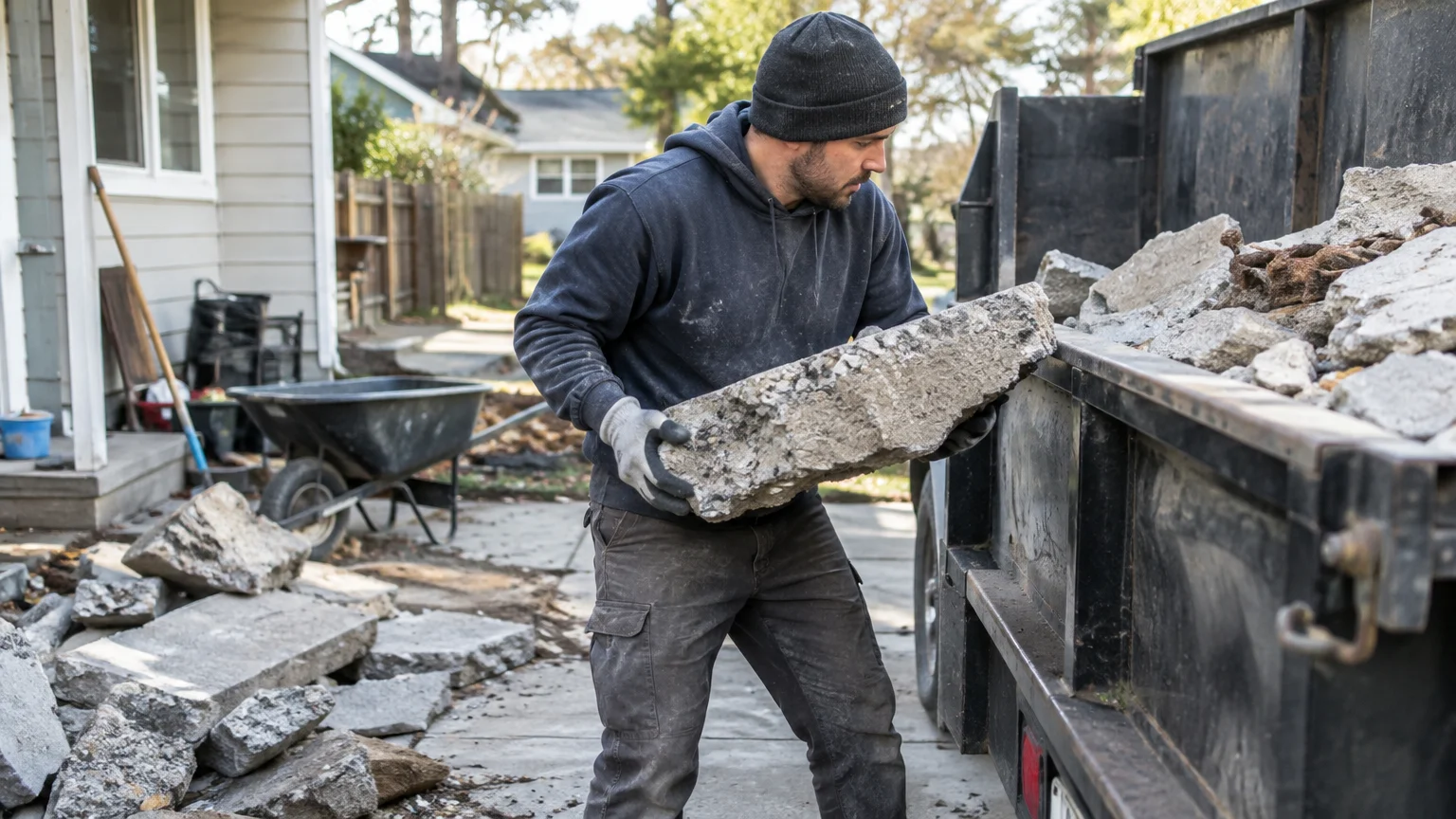
Concrete disposal FAQs can help you plan a cleanup, understand recycling options, and prepare for pickup. The cost of concrete disposal depends on the amount and weight, how easy the pile is to reach, and what else is mixed in. A clean, separate pile may have more recycling options. The final cost is confirmed on a quote after the job details are reviewed.
How much does concrete disposal cost?
The cost of removing concrete depends on the size and weight of the load, site access, and where the material can go. A small pile in an open driveway may be easier to remove than a large, mixed pile at the back of a work site. The final cost is confirmed on a quote once the job details are known.
What factors affect the cost of removing concrete?
The amount and weight of concrete matter. So does the distance from the pile to the truck, along with any stairs or narrow paths. Concrete in a clear driveway is often easier to reach than pieces spread across a work site. Large slabs may need to be broken into smaller pieces before they can be moved.
The condition of the material can also affect the removal plan. Clean concrete may have different disposal options from concrete mixed with soil, wood, drywall, or metal. Local rules and the receiving site’s requirements matter, too. Contractors can share photos and describe the pile to help Acworth Georgia Junk Removal understand the job before pickup.
How does concrete disposal compare with other construction debris removal?
Concrete is dense and heavy, so moving it can take more work than moving many light materials. Drywall, wood scraps, and packaging may be easier to carry, but mixed loads may still need sorting. The right plan depends on the amount and type of debris, not only on the pile’s size.
A cleanup may include other items along with concrete. Check which materials can go in the same load before setting anything out. Furniture removal and disposal or appliance removal and disposal may need a different plan from job-site rubble. A fridge, for example, should not be treated like broken concrete. Do not assume every item can go in one pile or to the same facility.
Can broken concrete be recycled?
Broken concrete may be recycled when a local facility accepts it and it is free of unwanted materials. Recycling options vary by location and depend on the condition of the concrete. A hauler or facility can check where a load may go.
How is concrete processed for reuse?
At a recycling facility, concrete may be sorted and crushed into smaller pieces. This crushed material may be used for some building or landscaping jobs, such as a base beneath new paving. Each facility decides what it accepts and how it will process a load.
Clean material is easier to check. Concrete with little or no attached wood, insulation, plastic, or soil may have more options for reuse than a mixed pile. Bricks and asphalt may also need to be handled separately, based on the site’s rules. Share what is in the pile before pickup so the hauler can check the right disposal route.
For projects Acworth Georgia Junk Removal can help explain what details to share about the debris and pickup spot. The receiving facility still sets its own rules. Those rules can differ, so check them before mixing concrete with other renovation waste.
What can prevent concrete from being accepted for recycling?
A facility may turn away a load if it has materials that are not allowed or is too mixed to sort. Soil, trash, drywall, wood, and metal can affect whether the load is accepted. Painted or treated pieces may need a closer check, so describe them instead of guessing.
Keep other waste in a separate pile when you can. Do not add household junk just because it is nearby. If a cleanup also has old furniture or appliances, check how those items are handled. For example, someone looking for a way to get rid of a fridge should ask about appliance handling instead of putting it with concrete chunks.
How do you prepare concrete for pickup?
Put concrete in a clear, easy-to-reach spot and keep it apart from other debris when possible. Tell the hauler what is in the pile and mention any limits on access. These simple steps can help prevent delays and make pickup safer for people at the work site.
What materials and debris can be included?
Accepted materials depend on the service and the destination facility. Broken concrete, bricks, and asphalt may be accepted, but name each material when arranging the job. Drywall, lumber, tile, and other renovation debris may also be handled, though they may need to stay apart from heavy rubble.
Before pickup, make a short list of the materials in the cleanup. Mention sharp pieces, large slabs, or anything mixed into the pile. If a property cleanout includes furniture, ask about its removal and disposal as a separate item. Office furniture removal and disposal may also need a different plan from construction waste.
Some household items are not construction debris. If the project includes a broken chair or old couch, ask how to get rid of old furniture rather than adding it to the rubble pile without checking. The same goes for appliances. Check what is accepted before setting out items.
How can you make heavy debris easier and safer to remove?
Homeowners can safely clear a path, move light loose debris, and keep people away from the work area. You do not need a professional for these simple tasks. But breaking large slabs, lifting very heavy pieces, or moving debris near weak walls can cause injury or damage. Leave those jobs to trained workers with the right tools.
Keep the pickup path clear of cords, tools, and loose items. Do not stack concrete where it could fall or block an exit. If the debris is in a garage, yard, or behind a building, explain the route and any gates or stairs. A clear description helps the crew plan how to reach the pile.
How quickly can concrete be picked up?
Pickup timing depends on crew availability, the amount of debris, site access, and where the load can go. A clear pile that is ready to reach may be easier to schedule than debris that still needs sorting or breaking. Ask about timing when arranging service, especially if the project has a set cleanup date.
What affects pickup timing and access at a job site?
A truck needs a safe place to park and a clear path to the concrete. Narrow drives, locked gates, stairs, active work areas, and blocked paths can affect access. Weather or other site conditions may also change how safely the crew can work.
Tell the hauler if the pickup is at a business, remodel, or shared site. Contractors should share any site rules, entry steps, or time limits. Property owners can point out the pile and keep pets and bystanders away from the work area. These details help everyone plan a smooth visit.
What should contractors and property owners confirm before scheduling?
Confirm the material list, pile location, access route, and the day the area needs to be clear. Check whether concrete, bricks, asphalt, and other debris can go together. Also ask whether the pile should be separated or moved to a certain spot before the crew arrives.
Share photos if they help, and be clear about large pieces or mixed waste. Do not assume a facility will accept a material until that has been checked. These steps can help contractors, remodelers, and property owners avoid confusion during job-site cleanup in Acworth.
Frequently Asked Questions
How do you dispose of concrete chunks? Keep the chunks together in a clear area and check what a hauler or local facility accepts. Separate concrete from soil, wood, drywall, and household trash when possible. Large pieces may need special handling, so describe their size and location before arranging removal.
Can concrete go in a regular trash bin? Check with the waste provider before putting concrete in a household bin. Heavy rubble may not be accepted in standard service. A concrete removal or construction debris service can help find a suitable option for the amount and type of material.
Can bricks and asphalt be picked up with concrete? They may be accepted, but rules vary by hauler and facility. Keep them separate when you can, then list each material when you ask about pickup. This makes it easier to check whether one collection can handle the full pile.
Should concrete be separated from other construction debris? Yes, separating it is often helpful. Concrete is heavy, and mixed loads may have fewer reuse or disposal options. Keep rubble apart from wood, drywall, appliances, and furniture until the pickup plan is confirmed.
Key takeaways:
- The amount, weight, access, and material mix shape the removal plan.
- Clean, separate concrete may have recycling options, depending on local rules.
- Keep heavy rubble apart from household items and other work-site waste.
- Clear access and a full list of materials can help prevent delays.
Conclusion: Planning ahead can make concrete cleanup safer and easier. Check what the facility accepts, keep materials sorted, and explain any access limits before pickup. For concrete disposal help in Acworth, Contact us to discuss the debris and arrange a collection. Learn more about Acworth Georgia Junk Removal.
If you are not sure what you are dealing with, it is worth having someone look at it before it turns into a bigger job. Get in touch with Acworth Georgia Junk Removal today and we will tell you where you stand.