Appliance disposal FAQs can help you choose the safest path for old appliances. Working units may be donated or reused, while broken units often belong in a recycling or scrap program. Refrigerators and freezers need extra care because they can contain refrigerant, oil, insulation, and other materials that regular trash cannot safely handle.
Table of Contents
- What is the most eco-friendly way to dispose of old appliances?
- Can refrigerators and freezers be recycled?
- How should washers, dryers, stoves, and dishwashers be disposed of?
- Can old appliances be donated instead of discarded?
- What are the rules for appliance disposal?
- How does appliance pickup work?
- How much does appliance disposal cost?
- Frequently Asked Questions
- Key Takeaways
- Conclusion
What is the most eco-friendly way to dispose of old appliances?
The best choice depends on the appliance’s condition. A clean, safe, working unit may be reused or donated. A broken or unsafe unit usually needs proper recycling or disposal. This keeps metal, glass, plastic, and other parts out of landfills.
Acworth Georgia Junk Removal helps Acworth property owners review these choices before pickup. The right plan can protect workers, prevent spills, and keep unsafe materials out of regular trash. Appliance disposal is more than moving a large item. Each part should go to the right place.
When should an appliance be reused or donated?
Reuse is often best when an appliance works well and has no safety problem. The unit should be clean, complete, and ready for another home or business. A donation group may ask for working controls, safe cords, and proof that the appliance can be tested.
Do not donate a unit with a damaged cord, gas leak, broken door, exposed wires, or major water damage. These issues can harm the next user. Repair may help with a newer unit. An older appliance with many faults may be better for recycling.
When is recycling the better option?
Recycling is often best when an appliance cannot be used safely or fixed in a sensible way. Recyclers can sort metal, wires, plastic, glass, and other parts. They can also handle refrigerant, oil, insulation, and electronic controls with the right tools.
Do not place a large appliance at the curb before checking local rules. Some areas need scheduled pickup, special drop-off, or approved handling. Acworth Georgia Junk Removal can help Acworth homeowners decide if a unit should be donated, recycled, recovered for scrap, or sent through another safe route.
Can refrigerators and freezers be recycled?
Yes, many refrigerators and freezers can be recycled. They need careful handling first. These units may contain refrigerant, oil, foam insulation, and electrical parts. A trained recycling or disposal program should manage those materials before processing the metal shell.
Refrigerant is the fluid that helps a cooling appliance remove heat. It must be recovered with proper tools. Do not cut lines, remove the compressor, or release refrigerant yourself. A qualified provider can check the unit and plan safe handling.
Why do refrigerants and insulation need special handling?
Refrigerant must be collected before the appliance is broken down. Foam insulation may also contain materials that should not be released or treated like normal household waste. These parts can look harmless even when the appliance is empty.
That is why a normal trash pickup may not be suitable. A responsible provider checks the cooling system, plans safe movement, and sends the unit to a route that can handle it correctly. This also helps protect workers and the area around the pickup.
What parts of a refrigerator can be recovered?
Many refrigerators contain useful steel, aluminum, copper, plastic, glass, and wire. The compressor, shelves, doors, and controls may be separated during processing. Some parts can be reused. Other parts can be prepared for material recovery.
Remove food before pickup and wipe away loose spills. Do not try to drain refrigerant or take apart the compressor. Keeping the refrigerator whole helps trained workers move it safely and choose the right disposal route.
How should washers, dryers, stoves, and dishwashers be disposed of?
Washers, dryers, stoves, and dishwashers should be checked before removal. Working units may be reused or donated. Broken units often go to a recycling or scrap site where metal, wires, motors, plastic, and other parts are sorted.
The right route depends on the appliance and its condition. Gas appliances need extra care because a connected gas line can be dangerous. Electric units may still hold water. They may also have sharp edges, heavy motors, or damaged wires.
Which appliance materials can be recycled or scrapped?
Large appliances often contain steel and other metals that can enter a recycling or scrap stream. Washers may have metal drums, motors, wires, and plastic parts. Dryers may contain sheet metal, heating parts, motors, and controls. Stoves and dishwashers may contain steel, glass, wires, and control panels.
A recycling site decides which parts can be recovered. The process differs by facility and local rules. Do not assume every part belongs in a curbside bin. Large-item recycling usually needs a separate drop-off or pickup.
What preparation is needed before pickup?
Preparation helps make removal safer and easier. Follow the maker’s shutdown steps. Arrange utility disconnection when needed. A qualified person should handle gas, water, and electrical connections when the work is not safe for a homeowner.
Before pickup, owners should:
- Empty and clean the appliance.
- Remove loose shelves, racks, and stored items.
- Secure doors, lids, and moving parts.
- Clear a wide path from the unit to the exit.
- Tell the pickup provider about stairs, tight doors, or weak flooring.
A homeowner can safely clean and empty many appliances. However, gas lines, refrigerant, and exposed wires are not casual do-it-yourself jobs. Stop if the work feels unsafe.
Can old appliances be donated instead of discarded?
Yes, donation may work when an appliance is clean, safe, complete, and working. Each group has its own rules for age, size, condition, and pickup access. Some groups accept tested appliances only. Others accept certain types of equipment.
Donation keeps a useful item in service. It may also reduce the need for new materials. Still, confirm acceptance before moving the appliance or arranging transport. A group may reject a unit that does not meet its rules.
What condition should an appliance be in for donation?
A donated appliance should work as intended and have no known safety issue. It should not have a frayed cord, broken plug, cracked glass, mold growth, active leak, or missing safety part. Tell the group about known problems instead of passing the risk to another home.
Clean surfaces matter too. Food residue, heavy grease, standing water, and strong odors may lead to a refusal. A homeowner can often handle basic cleaning without professional help. Let the unit dry before moving it.
How do donation requirements vary by appliance type?
Refrigerators and freezers may need working cooling and a door that seals well. Washers and dishwashers may need to run without leaks. Dryers may need a working drum, safe cord, and clear lint area. Stoves may need working controls and intact burners or heating parts.
A donation group may limit older models or units with missing pieces. Acworth Georgia Junk Removal can help property owners sort usable appliances from units that need recycling. If donation is not accepted, specialized appliance recycling may be the next responsible choice.
What are the rules for appliance disposal?
Appliance disposal rules depend on the local government, waste site, appliance type, and materials inside the unit. Some places require special handling for refrigerators, freezers, air conditioners, and other cooling equipment. Others have separate rules for bulky items, scrap metal, and curbside pickup.
Check with the local waste department or ask a qualified removal provider before setting out a large appliance. Rules may cover pickup days, appliance preparation, refrigerant recovery, blocked sidewalks, and approved drop-off sites.
Why do local disposal and recycling rules matter?
Local rules help prevent unsafe dumping and protect collection workers. They also guide residents to sites that can handle refrigerants, oils, electronics, glass, and heavy metal parts. A plan that works in one town may not work in another.
This matters for homes, rentals, offices, stores, and renovation projects. Property owners should also protect tenants and keep shared paths clear. In Acworth, responsible removal means checking the route before the appliance leaves the property. This is also useful when planning office cleanout faqs, retail removal faqs, or house cleanout faqs.
Which appliances may require approved handling?
Cooling appliances often need approved handling because of refrigerant and compressor parts. Gas appliances may need careful disconnection. Units with electronic controls may also need special processing at a recycling site.
Never burn, crush, cut, or abandon a large appliance. Do not place a refrigerator or freezer in normal trash unless local rules clearly allow it. A proper appliance removal service can help find a safer next step without asking the owner to take apart the unit.
How does appliance pickup work?
Appliance pickup usually starts with details about the unit, its condition, and the removal path. The provider may ask if it is a refrigerator, washer, dryer, stove, or dishwasher. Details about stairs, lifts, narrow halls, gates, and utility lines help the crew plan.
Acworth Georgia Junk Removal serves customers across the Acworth area. The team can help plan removal for homes, rentals, offices, and other properties. The process should focus on safe lifting, careful movement, and responsible sorting after collection.
What should homeowners and property owners do before pickup?
Empty the appliance, remove nearby clutter, and keep children and pets away from the work area. A clear path helps reduce damage to walls, floors, doors, and the appliance. Share known hazards before the crew arrives.
Useful details include:
- The appliance type and approximate size.
- Whether the unit works, is damaged, or leaks.
- The number of stairs or tight turns on the path.
- Any gate, parking, lift, or access limits.
- Whether the unit connects to water, gas, or power.
Do not hide a damaged cord, leak, pest issue, or unstable appliance. Clear details help the provider choose the right tools and handling plan.
How are heavy appliances removed safely?
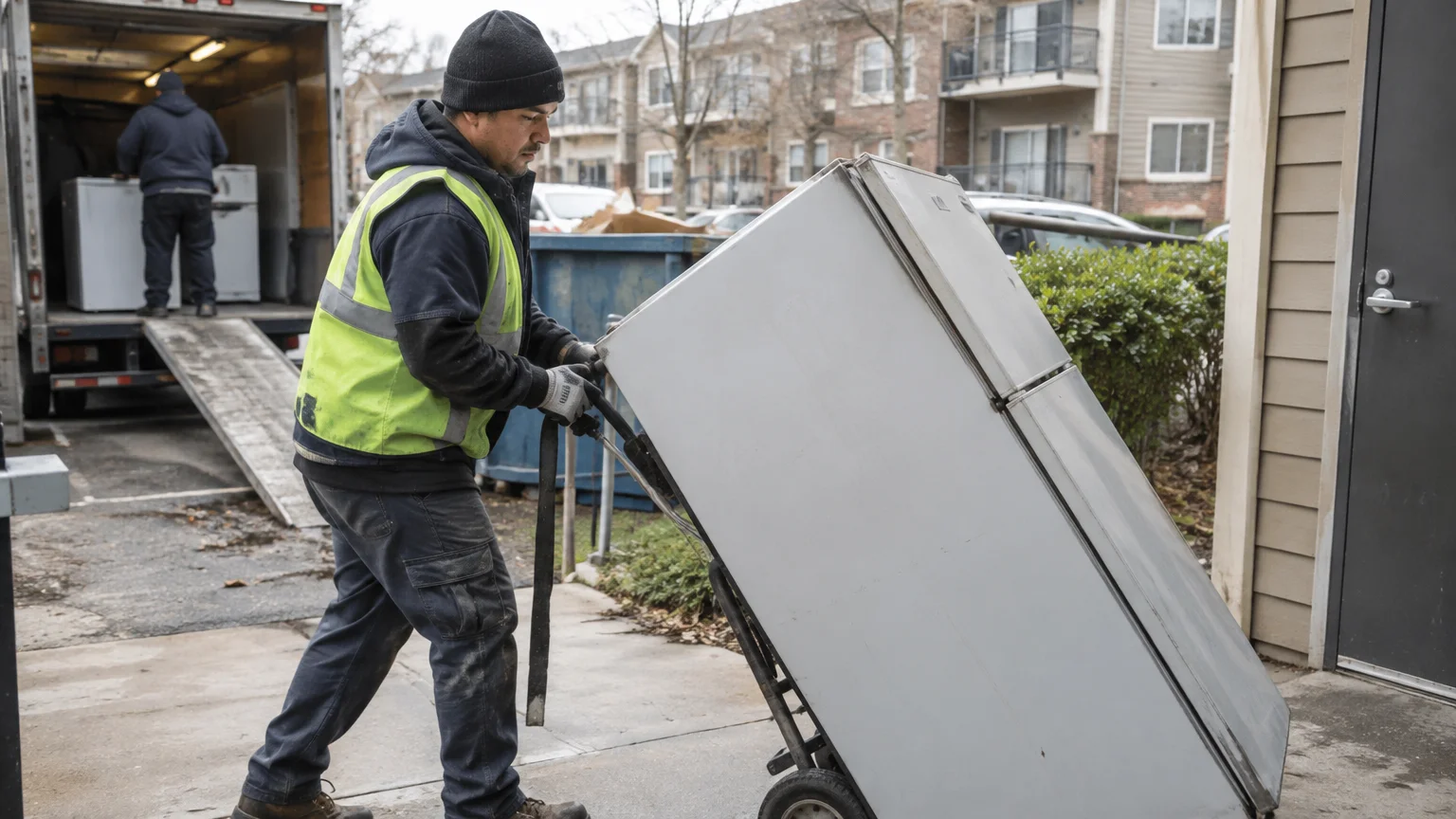
Heavy appliances are moved with careful lifting, hand trucks, straps, and teamwork. Crews may protect floors and door frames while guiding the unit through narrow spaces. They should not drag an appliance across finished flooring or tip it without a safe plan.
Refrigerators should stay upright as much as possible during movement. Washers can hold hidden water. Dryers and stoves may have sharp edges. A trained crew checks the route first and keeps the appliance stable from the room to the collection vehicle.
How much does appliance disposal cost?
Appliance disposal costs depend on the appliance, access, condition, location, and disposal route. A small unit near an exit is often simpler than a large unit in a basement or upper floor. Refrigerant handling, extra labor, difficult access, and special facility rules can affect the final quote.
Compare the job details instead of assuming every appliance removal is the same. One dishwasher may be easier to move than several large units. A refrigerator with a clear path may be simpler than a damaged unit behind tight doors or stairs. The final cost is confirmed on a quote.
What factors affect the cost of removal and disposal?
Main factors include the number and size of appliances, the distance to the vehicle, and the condition of the path. Stairs, lifts, narrow doors, long carries, and limited parking can make the work harder.
The disposal route also matters. Donation may require a usable condition and an accepting group. Recycling may need a site that handles refrigerants or electronics. Scrap handling may depend on the parts that can be recovered. The final cost is confirmed on a quote after the job details are reviewed.
How does recycling, donation, or scrap handling affect the final quote?
Each route has different handling needs. Donation may require testing, cleaning, and careful transport. Recycling may need sorting and approved processing. Scrap recovery may involve separating heavy metal from plastic, glass, wires, and other parts.
Ask what happens after pickup and whether reusable items are separated from recyclable materials. Acworth Georgia Junk Removal can explain the removal plan for Acworth properties. The owner can then choose a practical route before scheduling the work. The final cost is confirmed on a quote.
Frequently Asked Questions
How can someone get rid of an old refrigerator?
An old refrigerator should go through donation, approved recycling, or specialized appliance disposal. Empty it first and do not cut refrigerant lines. Check local rules before pickup. A removal provider can move the unit safely and send it to a site that handles refrigerants and recoverable materials.
Can an appliance go in a regular dumpster?
Large appliances usually should not go into a regular dumpster without checking the provider and local rules. Refrigerators, freezers, and some other units may need special handling. Ask about accepted materials before placing an appliance in a container or at the curb.
Is appliance pickup always available?
Pickup is not available in every area or for every appliance. Some programs accept only certain working units. Others limit service by location, condition, or appliance type. Confirm the rules instead of assuming that appliance removal near me results will fit your property.
What happens to old appliances after pickup?
Old appliances may be donated, taken apart for material recovery, recycled, or sent through another approved route. The result depends on condition and local facility rules. Responsible handling can recover metals and other parts while keeping refrigerants, oil, and unsafe materials out of regular waste.
Does a homeowner need a professional to prepare an appliance?
A homeowner can usually empty, clean, and clear access around an appliance. Professional help may be needed for heavy lifting, refrigerant, gas connections, exposed wires, or hard removal paths. When safety is unclear, stop and use a qualified service instead of taking apart the unit.
Key Takeaways
- Working appliances may be reused or donated when they are clean, safe, and complete.
- Broken refrigerators and freezers need careful handling because of refrigerants, oil, insulation, and compressors.
- Large appliances should not enter regular waste streams without checking local rules first.
- Clear access and honest condition details help make pickup safer and easier.
- The final quote depends on the appliance, access, labor, and disposal route.
Conclusion
Responsible appliance disposal starts with a simple condition check. A working unit may help another household through donation. A damaged unit may be better for recycling or scrap recovery. Refrigerators and freezers need extra care because their cooling systems can contain materials that require approved handling.
Homeowners, landlords, business owners, and property managers should check local rules before placing an appliance outside. They should also clear a path and avoid unsafe work with gas, refrigerant, or damaged wires. Contact us to arrange appliance pickup and discuss the right disposal option.