To prepare for a warehouse cleanup, set a clear goal, sort items, mark safe work zones, and plan removal around daily work. A simple plan helps staff and contractors work safely. It also keeps loading, shipping, receiving, and customer service moving while pallets, shelving, equipment, and debris leave the building.
A warehouse cleanup can feel hard when old items block aisles or fill work areas. The right plan gives each person a clear job. It also helps Acworth Georgia Junk Removal understand what needs to leave. For businesses in Acworth, good planning can make a busy facility easier to manage.
Table of Contents
- What should you do before a warehouse cleanup begins?
- How can you identify everything that needs to be removed?
- How do you keep warehouse operations moving during cleanup?
- What safety checks should be completed before clearing warehouse junk?
- How should you prepare pallets, shelving, and bulky equipment for removal?
- How can you coordinate commercial junk removal with a warehouse schedule?
- What should you check after a warehouse cleanup is finished?
- Frequently Asked Questions
- Key Takeaways
- Conclusion
What should you do before a warehouse cleanup begins?
Before work starts, a warehouse manager should set the goal, walk the site, and give each person a clear task. The goal may be to clear an aisle, make room for new stock, prepare for a move, or remove old equipment. A clear goal helps everyone know when the job is done.
Define the cleanup goals and completion requirements
Begin with a short written plan. List the areas that need work, the items that should leave, and the paths that must stay open. Add any deadline tied to a shipment, inspection, lease change, renovation, or equipment delivery. Also name the person who will give final approval.
A cleanout service is a planned service for removing unwanted items from a property. It may cover one area or the entire warehouse. It can include sorting, lifting, loading, hauling, and handling accepted materials. Ask about restricted items before the work begins.
Assign responsibilities to warehouse staff and contractors
Each person should have one main role. One worker can lead the site walk. Another can mark items for reuse or removal. A supervisor can control access and answer questions. Staff should not guess about equipment ownership, records, or items that may have value.
A written list also helps the removal team work faster. Include dock details, gate rules, parking needs, building hours, and contact steps. Acworth Georgia Junk Removal can help warehouse owners decide which materials are ready to leave. Clear instructions reduce delays and repeat handling.
How can you identify everything that needs to be removed?
The best way to find warehouse junk is to inspect every area and sort items by type and use. Do not depend on memory. Walk the floor, check corners and storage rooms, and look above normal eye level. Mark each item so workers can make the same choice throughout the cleanup.
Separate pallets, shelving, equipment, and general debris
Start with broad groups. Pallets may be reusable, broken, or ready for disposal. Shelving may stay, move to another area, or leave the building. Equipment needs extra review because it may contain batteries, fluids, refrigerants, or other parts that need special care.
General debris may include damaged boxes, wrap, broken fixtures, scrap wood, and leftover building supplies. Keep office cleanout items separate from warehouse materials when possible. Files, computers, and business records may need secure handling instead of regular junk removal.
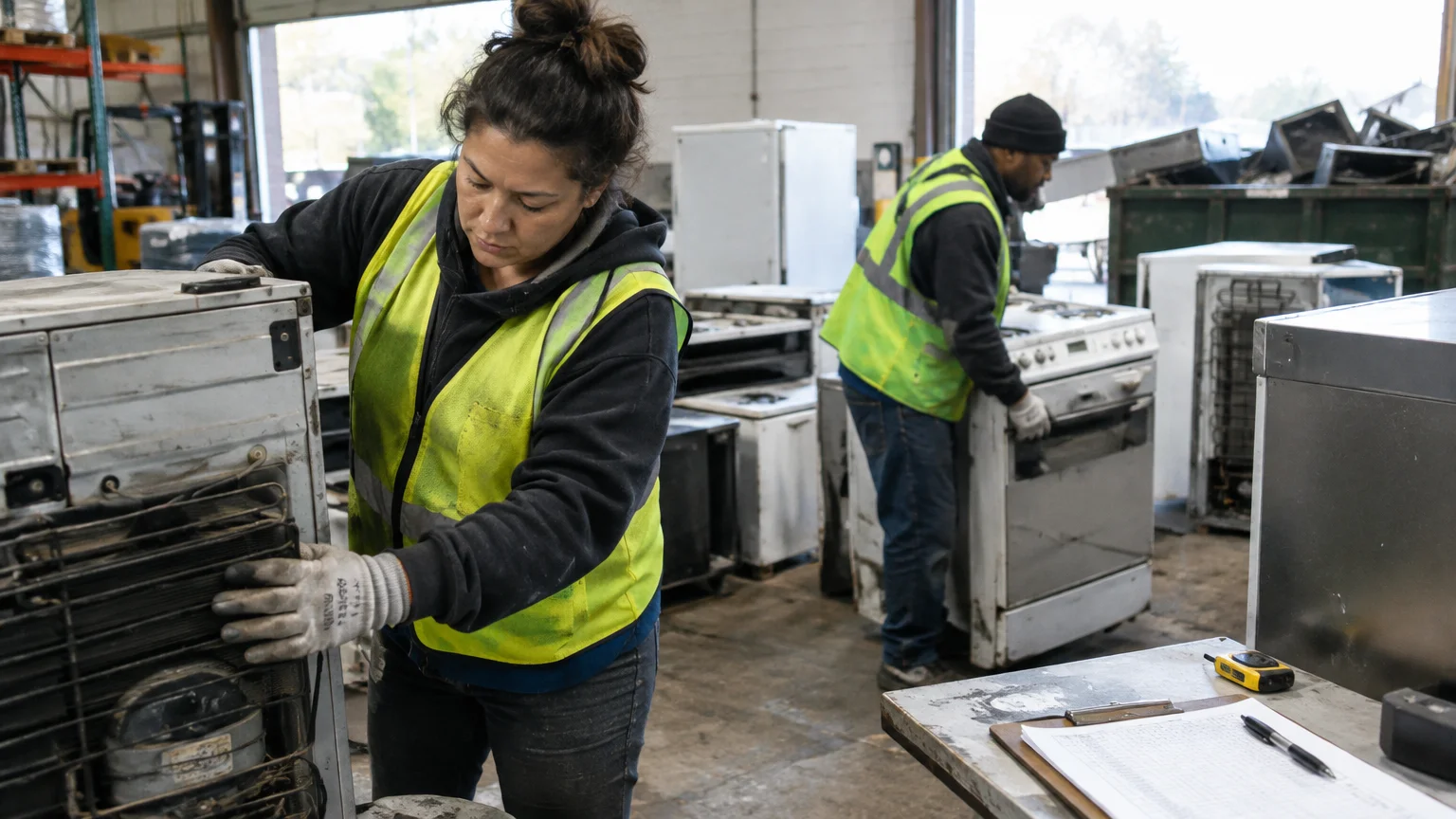
Appliances also need care. When a business needs to know how to get rid of a fridge or how to dispose of a refrigerator, the manager should identify the unit first. Old appliances may contain refrigerants, oils, wiring, or other parts. The same rule applies when deciding how to dispose of appliances in general.
Mark items for removal, reuse, recycling, or disposal
Use simple labels or colored tape. A four-group system works well: remove, reuse, recycle, and review. The review group protects uncertain items from leaving by mistake. Take clear photos of large groups before moving them. Photos can help managers confirm what was approved.
Do not place items in the removal zone until the owner or manager agrees. This matters for tools, spare parts, inventory, and leased equipment. Careful sorting protects the business from lost property and helps prevent the wrong items from being loaded.
How do you keep warehouse operations moving during cleanup?
Warehouse work can continue during a cleanup when the manager divides the building into safe zones. Plan removal around busy times. The cleanup team should never block emergency paths, active loading areas, fire equipment, or routes used by workers and vehicles.
Create work zones and maintain safe access routes
Mark three areas: work in progress, approved removal, and normal operations. Use signs that workers can see from far away. Keep aisles open for normal traffic, and keep loose debris out of travel paths. If one route must close, mark an alternate route first.
A temporary staging area can keep the main floor clear. It should be dry, stable, and away from doors or vehicle paths. Think about noise, dust, and blocked light as well. A small cleanup needs less control than a full warehouse cleanout, but both need clear limits.
Businesses should also keep digital cleanup separate from physical work. The phrase cleanup junk files usually means removing unwanted files from computers or shared drives. An approved technology or records process should handle that task. Deleted business files may contain private information.
Schedule removal around deliveries, shipping, and receiving
Review the warehouse calendar before choosing a work window. Avoid busy receiving times, large outbound shipments, and shift changes when possible. Tell drivers and staff which dock or entrance will be used. If a delivery changes the plan, pause loading instead of working around moving vehicles.
A short work window can be safer than an open-ended cleanup. Release one zone at a time and check progress between zones. This helps the business keep serving customers while unwanted materials leave the property.
What safety checks should be completed before clearing warehouse junk?
Before clearing warehouse junk, inspect for unstable stacks, sharp materials, blocked exits, spills, exposed wires, and restricted areas. Workers should know which hazards they can report and which tasks need trained help. Safety should come before speed.
Inspect for hazards, unstable materials, and restricted areas
Look for leaning pallets, damaged racks, loose shelves, broken glass, nails, leaking containers, and heavy items stored too high. Check behind equipment and inside forgotten corners. Some hazards appear only after a pile moves. Mark unsafe areas and keep untrained people away.
Identify items that ordinary hauling may not accept. These may include chemicals, fuel, explosives, medical waste, asbestos materials, pressurized cylinders, or other regulated waste. A trained specialist or local authority may need to handle them. Give the removal team a full description before arrival.
Hot tubs can also need special handling. A business asking how to get rid of a hot tub should first disconnect utilities and confirm that the unit is empty. Large or damaged units may need several people and a planned path. Never cut or move one until power, water, and other connections are safe.
Coordinate equipment use, staff access, and protective measures
Only trained workers should use forklifts, pallet jacks, lifts, compactors, or other powered equipment. Keep pedestrians away from moving loads. Staff should wear suitable shoes, gloves, eye protection, and other gear for the task. The right protection depends on the material and site.
The plan should include a stop-work rule. Anyone should be able to pause the job when an unknown liquid, unstable load, live wire, or serious risk appears. A pause gives the manager time to inspect the problem and get the right help.
How should you prepare pallets, shelving, and bulky equipment for removal?
Pallets, shelving, and bulky equipment should be emptied, checked, and prepared before removal. Staff should not take an item apart unless they understand its weight, balance, fasteners, and connection points. Some large items are safer to move whole with proper equipment.
Disassemble or consolidate materials when appropriate
Remove loose parts from shelving and place small hardware in labeled containers. Group similar pallets and stack only sound pallets. Do not stack damaged wood where it can fall or create a trip hazard. Keep reusable materials away from items approved for disposal.
For equipment, remove normal contents and secure doors, drawers, and moving parts. Do not drain fluids or disconnect complex systems without proper training. Refrigerated units, air equipment, and machines with batteries may need special instructions. Ask about handling before cleanup day.
When a warehouse clears old appliances, do not assume every item belongs in one load. What happens to old appliances depends on the item, its condition, and local rules. Some parts may be reused or recycled, while others need a special process.
Prepare oversized items for efficient loading and handling
Measure large items and note narrow doors, low ceilings, ramps, stairs, and tight turns. Clear the route before moving anything. Remove loose clutter and protect walls or finished floors when needed. A route check can prevent damage and delays.
Tell the removal team about weight, size, condition, and access limits. Add photos when possible. This helps the team plan labor and equipment. The manager should also decide whether an item may be lifted, rolled, taken apart, or moved only by a specialist.
Large debris may need to be grouped into stable piles. Do not overfill boxes or make unstable stacks. Safe preparation helps the team load well and keeps workers from handling the same item more than once.
How can you coordinate commercial junk removal with a warehouse schedule?
The smoothest commercial junk removal projects begin with full site details and a shared work plan. Explain what must leave, what must stay, when work may happen, and how the team will enter and exit. Good communication prevents delays.
Share site details, access instructions, and removal priorities
Provide the business name, site address, loading instructions, gate rules, parking limits, and building hours through the normal booking process. Explain whether the site has docks, stairs, elevators, security checks, or limited vehicle access. Share the priority order for each removal zone.
Choose one on-site decision maker. That person can answer questions about uncertain items and direct the team to the next area. If several managers are involved, agree on the process before work starts.
Businesses in the main Acworth area, including Downtown Acworth, Lake Acworth, Kennesaw, Woodstock, Marietta, and Cartersville, may have different access needs. A downtown site may have tight parking, while an industrial site may have larger gates and longer walking routes. Share these details so Acworth Georgia Junk Removal can plan around the real warehouse conditions.
Plan loading areas, parking, and final walkthroughs
Choose a loading spot that does not block emergency access or normal deliveries. Keep the route between the removal zone and vehicle clear. If staff vehicles must move, tell drivers before cleanup begins. Small details can keep the site calm.
Set a time for a final walkthrough with the manager. Compare cleared areas with the original list. Check behind doors, under shelving, and near dock walls. Confirm that approved items are gone and review items were not removed by mistake.
Commercial junk removal may support office cleanout work, retail debris removal, and warehouse junk hauling. Match the removal plan to the building, materials, and work schedule. A clear plan works better than a rushed request after a blocked aisle becomes urgent.
What should you check after a warehouse cleanup is finished?
After a warehouse cleanup, confirm that approved materials are gone, work areas are safe, and normal operations can resume. The final check should cover both the result and any work that remains.
Verify that the intended materials and debris were removed
Use the original list, labels, and photos during the walkthrough. Check each zone in the same order used during planning. Look for broken pallets, loose wrapping, scrap metal, damaged boxes, and debris under racks. Also check that reusable items are in their planned places.
Review anything that could not be removed. It may need a specialist, owner approval, repair, recycling plan, or another visit. Write down the reason instead of leaving the issue unclear. This gives the business a useful record.
Restore organized work areas and document follow-up needs
Return signs, barriers, tools, and staging materials to their proper places. Reopen routes only after checking the floor, doors, lighting, and nearby storage. Make sure pallets and equipment are stable. An organized floor is safer for daily work.
Take final photos for internal records. Note what was removed, reused, and left for later. The record can help with future office cleanout work, lease handoffs, warehouse changes, or equipment replacement.
A finished cleanup should make the next task easier. In Acworth, the same process can work for a small storage area or a larger commercial cleanout. Acworth Georgia Junk Removal can help when approved materials are ready for a planned removal visit.
Frequently Asked Questions
What is a warehouse cleanout service?
A warehouse cleanout service removes unwanted items from a commercial storage or work site. It may include pallets, shelving, equipment, boxes, fixtures, and general debris. The business first identifies what should leave. The removal team then plans safe access, loading, hauling, and handling.
How can a business get rid of an old refrigerator?
A business should identify the refrigerator, clear its contents, and ask about proper handling before moving it. Refrigerators may contain refrigerants, oils, wiring, and other parts that need care. Staff should not cut lines or remove parts unless trained. The removal provider can explain accepted options.
Can warehouse staff prepare everything without professional help?
Yes. Staff can sort items, label zones, clear paths, take photos, and gather site details. They should not handle unknown chemicals, unstable heavy loads, live connections, or restricted materials without training. Professional help is useful for bulky items, large volumes, difficult access, or tight deadlines.
How should a business handle old pallets and shelving?
Separate sound pallets and usable shelving from broken or unwanted materials. Empty shelving before moving it, secure loose parts, and keep hardware together. Large or unstable sections may need careful dismantling or special equipment. Keep reusable items away from the approved removal area.
What happens to old warehouse equipment?
Old equipment may be reused, recycled, donated, repaired, or disposed of, based on its condition and parts. The result also depends on the material and local rules. Before removal, check for batteries, fluids, refrigerants, private data, or leased components.
Key Takeaways
- Set the cleanup goal first so everyone knows what must be done.
- Sort and label materials before anything enters the removal area.
- Keep routes, exits, docks, and work zones clear during the project.
- Separate hazardous or restricted items from ordinary warehouse junk.
- Plan access and timing around shipping, receiving, and daily operations.
Conclusion
A warehouse cleanup works best when treated as a short project, not a rushed pile of tasks. Clear goals, careful sorting, safe routes, and good timing help protect staff and keep work moving. Good preparation also makes commercial junk removal easier to plan.
Contact us today to plan a warehouse cleanup with Acworth Georgia Junk Removal.