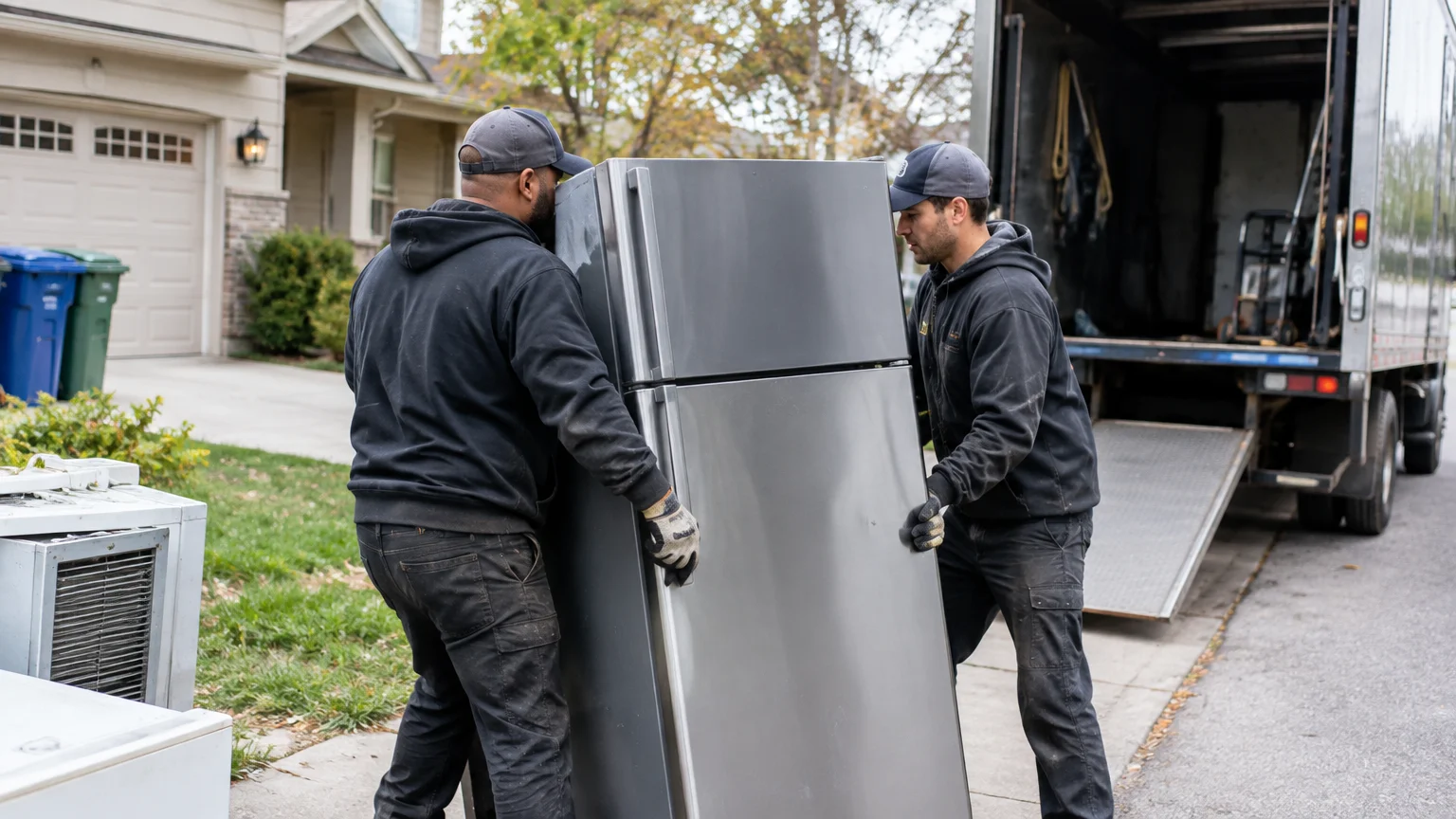
To schedule appliance pickup without delays, share the appliance type, size, location, access details, and preferred date first. Empty the appliance and remove loose parts before the visit. A clear path and safe disconnection help the team collect refrigerators, washers, dryers, stoves, and dishwashers with less stress.
What information do you need to schedule appliance pickup?
To schedule appliance pickup, the provider needs clear details about the item and property. This helps the team plan the right truck, tools, and crew. It also helps prevent problems when an appliance sits in a tight space or behind a gate.
Acworth Georgia Junk Removal helps homeowners, landlords, office managers, and property professionals plan their pickup. A short item description is useful, but photos may show the space more clearly. Tell the provider if the appliance is inside a home, in a garage, on a porch, or outdoors.
Which appliances can typically be collected?
Most appliance pickup services collect large household appliances. Common items include refrigerators, freezers, washers, dryers, stoves, ovens, ranges, and dishwashers. Some providers may also collect smaller appliances, water heaters, or commercial equipment. This depends on local rules and the service area.
Mention unusual items before booking. A large commercial freezer, built-in oven, or basement appliance may need more planning. The same applies to items at an office, rental property, storage space, or work site. Sharing these details early lets the provider confirm if the item fits the service.
What details should you share before pickup day?
Share the appliance type, approximate size, number of items, floor level, and removal location. The provider should also know about stairs, narrow doors, elevators, long paths, locked gates, and parking limits. Explain if the appliance is built into cabinets or linked to special lines.
A useful pickup request includes:
- The appliance brand and type, if known
- The number of items ready for removal
- The room or outdoor area where each item sits
- Stairs, tight turns, gates, elevators, or other access concerns
- Whether each appliance is empty, disconnected, and ready to move
- Photos that show the item and its path to the truck
The main Acworth area includes Downtown Acworth and Lake Acworth. It also reaches nearby places such as Kennesaw, Woodstock, Marietta, and Cartersville. Homes, rentals, businesses, and other local spaces may need appliance pickup. Clear details help Acworth Georgia Junk Removal plan a safer visit across the area.
How should you prepare appliances for pickup?
Appliances should be empty, clean enough to handle, and disconnected by a trained person when needed. Homeowners can usually remove food, clothes, dishes, shelves, and loose parts themselves. Do not cut gas lines, electrical wires, water lines, or refrigerant tubing without proper training.
Preparation helps protect the property, crew, and people nearby. It also lowers the chance that an item stays behind because it remains connected to a utility line. The provider can explain what must happen before arrival.
How do you disconnect and empty refrigerators, washers, and dishwashers?
Empty food and drinks from a refrigerator. Secure or remove shelves and bins. Unplug the unit only when safe, and keep the doors closed or secured during movement. Refrigerators and freezers may contain refrigerant, which is a chemical used to make cold air. It needs special handling during disposal and recycling.
Empty a washer and let it drain. Hoses should be removed by someone who understands the water shutoff and can handle leftover water. A dishwasher should be empty and disconnected from power and water by a qualified person when needed. Towels or a shallow pan can catch small amounts of water.
Dryers and stoves need care as well. Electric units must be disconnected safely. Gas appliances should be shut off and disconnected by a qualified professional. Never force a gas fitting or cut a power cord to speed up removal.
What access and safety issues should you check?
Clear the path from the appliance to the pickup spot. Remove boxes, rugs, toys, small furniture, and other trip hazards. Keep children and pets away from the work area. Check that doors open wide enough and that halls have room for safe movement.
Tell the team about steps, uneven ground, wet areas, loose rails, and low ceilings. An appliance may look easy to move but become hard at a sharp turn or narrow door. If a door, cabinet, or rail must come off, ask about it before pickup day.
How do appliance pickup rules vary by appliance type?
Appliance disposal rules depend on the item, its parts, and local needs. Cooling appliances often need different handling from washers, dryers, stoves, and dishwashers. A responsible appliance recycling service separates metal and other materials when possible.
Rules can also vary by county, utility program, transfer station, and waste facility. Acworth Georgia Junk Removal can explain the usual removal process for customers and nearby areas. Ask the provider about any special handling before the appointment.
What should you know about refrigerators and other cooling appliances?
Refrigerators, freezers, and some window air conditioners may contain refrigerant. Refrigerant helps a cooling system make cold air. Check local rules or ask the pickup provider how it should be handled before recycling or processing.
Do not puncture, drain, or take apart a cooling appliance. Do not place one beside the curb unless local instructions allow it. The pickup provider may need to know if the unit is sealed, damaged, or missing parts.
Old freezers and refrigerators may be collected through appliance removal services, local recycling programs, or utility programs. The best choice depends on the item and local rules. A provider can explain whether the appliance is ready for recycling, reuse, or another approved route.
How are washers, dryers, stoves, and dishwashers handled?
Washers, dryers, stoves, ovens, and dishwashers often contain metal and other recyclable parts. They may go to a recycling facility after safe removal. Items with gas connections, broken glass, sharp edges, or heavy parts need extra care.
A stove or dryer with a gas connection should be handled after the gas supply is safely shut off. Report a broken oven door or cracked cooktop before pickup. Dishwashers and washers may hold water and leak during loading if they are not drained.
Businesses and rental owners should mention several appliances at once. A turnover, office update, or cleanout may include furniture, boxes, or renovation debris too. A junk removal provider can help separate appliance pickup from other items.
How can you prevent delays on appliance pickup day?
The best way to prevent delays is to confirm the item list, access route, utility status, and pickup window. Appliances should be ready in the agreed spot unless inside removal has been confirmed. Clear details matter most at rental homes, commercial spaces, and properties with limited parking.
A quick check the day before can find missing details. It gives the property owner time to finish safe preparation or ask questions. This helps when a tenant, worker, or manager must provide access.
What should you confirm with the pickup provider?
Confirm which appliances are included and where they are located. Ask if the team can remove items from inside, if gates must be unlocked, and if someone must be present. Make sure the pickup window and property instructions are clear.
Before the visit, confirm:
- The full list of appliances ready for collection
- The location of each item inside or outside the property
- Any stairs, elevators, narrow doors, gates, or parking limits
- Whether each appliance is empty and safely disconnected
- Any broken glass, leaks, sharp edges, or loose parts
- Who will provide access if the property is occupied or managed remotely
A reminder can prevent a failed visit caused by a locked gate, missing appliance, or unsafe connection. It also helps the crew protect walls, floors, doors, and other property features.
What happens when an appliance cannot be safely removed?
A pickup provider may leave an appliance in place if it is connected to gas, trapped in a structure, leaking, unstable, or blocked by unsafe conditions. This protects people and property. The provider should explain what must change before removal can continue.
A homeowner may need a qualified electrician, plumber, gas technician, or appliance repair worker first. The provider may also suggest clearing the path, securing pets, fixing a damaged doorway, or arranging building access. Never pressure a crew to move an unsafe appliance.
Key takeaways
- Share the appliance type, number, size, location, and access details early.
- Empty refrigerators, washers, dryers, stoves, and dishwashers before pickup.
- Use a qualified professional for gas, electrical, water, or refrigerant connections.
- Keep paths clear and report stairs, gates, tight turns, leaks, and broken parts.
- Confirm the item list and access plan before pickup day.
Frequently Asked Questions
Who takes old freezers?
Junk removal companies, appliance recyclers, transfer stations, and some local programs may take old freezers. Keep the freezer intact unless a qualified professional has prepared it. The provider may ask if it is empty, accessible, and sealed. Local rules can affect the available recycling or disposal option.
Can a pickup team remove an appliance from a basement?
A pickup team may remove an appliance from a basement if the stairs, doorway, and route are safe. Describe the stairs, turns, ceiling height, and appliance size before booking. Photos can help the provider review the path. Unsafe or blocked access may need preparation first.
Should a homeowner disconnect an old gas stove?
A homeowner should not disconnect a gas stove without proper training and permission. The gas supply must be shut off safely, and the connection must not be forced or cut. A qualified gas professional can prepare the appliance before pickup.
Can a pickup service recycle appliances?
Many pickup services send appliances to recycling or approved disposal facilities when possible. Metal, wiring, and other materials may be separated after safe processing. Refrigerators and freezers need special care because of refrigerant. Ask how each appliance type will be handled before collection.
Conclusion
Good preparation makes appliance pickup easier for everyone. Share clear details, empty each appliance, protect the access path, and arrange safe disconnection when needed. Acworth Georgia Junk Removal helps property owners plan appliance removal for homes, rentals, offices, and commercial spaces.
Contact us to arrange appliance pickup with Acworth Georgia Junk Removal.